Overview
PUPIL MANAGEMENT
Overview
The Pupil Management Department is committed to cultivating a positive education culture that promotes well-being, resilience and happiness among our students. We believe that a safe, supportive and positive learning environment is crucial for students to achieve both academic success and personal growth.
Our team integrates positive education principles into our counselling and behaviour management practices, emphasising the development of character strengths, positive relationships and mindfulness. We prioritise the social and emotional development of our students and work closely with key stakeholders to ensure that every student feels valued, respected and supported throughout their journey in BPS.
School-based Key Programmes
Pastoral Care in BPS
At BPS, prioritising student well-being is foundational. We firmly believe that a positive and supportive learning environment is essential for a holistic educational experience. Through cultivating strong teacher-student relationships and meaningful partnerships with parents, we foster the holistic development of our students.
As students progress through different phases of their primary school journey, educators and parents are equipped with essential skills and strategies to address challenges effectively.
The Pastoral Team in BPS provides interventions that go beyond managing immediate concerns. Our focus is on empowering students to develop resilience, adaptability and empathy. Aligned with our commitment to positive education, these interventions emphasise building a positive mindset, strengthening character strengths and promoting overall well-being.
In addition, our School Counsellors proactively reach out to students during recess, and conduct stress management talks and group sessions to equip them with practical tools to cope with academic and social demands. This holistic approach supports students in the present and empowers them with valuable life skills for the future.
Assembly talks
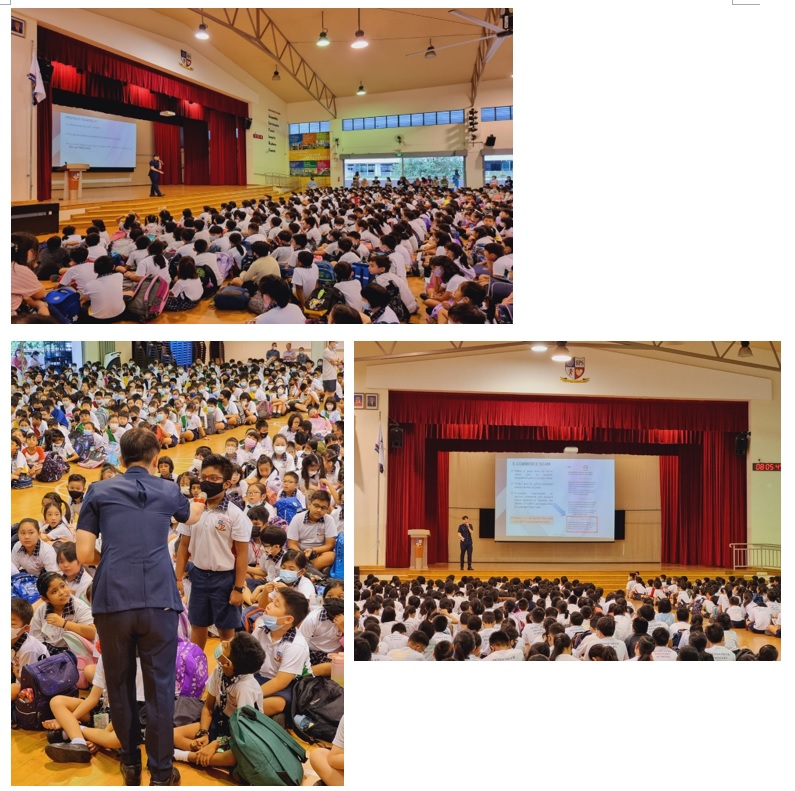
The department promotes a positive school culture and student well-being through regular assembly talks that emphasise positive behaviour, respect and accountability. Positive education principles are integrated into these sessions to help students develop essential life skills such as mindfulness, empathy and building positive relationships.
Our aim is to foster a safe and inclusive learning environment that supports both academic excellence and character development.
Induction Programme for New Students
An induction programme is provided for every new student who joins the school at any point during the year. The programme involves the School Administrative Manager, School Counsellor, Form Teacher, the new student and a peer buddy.
This structured programme ensures that every new student feels welcomed, supported and well-integrated into the school environment, with their academic and social-emotional needs carefully monitored.
Provision of Support for Students with Emotional, Behavioural and Financial Needs
The department adopts a multi-tiered approach to support students’ well-being:
-
Preventive education through assembly talks to raise awareness of issues such as drug abuse, smoking, vaping, cyber wellness and healthy social interactions.
-
Students with additional needs and those with emotional or behavioural concerns are referred to the Special Educational Needs Officer (SENO) and/or School Counsellor for targeted guidance and intervention.
-
Financial assistance schemes are made available to support students from financially disadvantaged backgrounds.
Model Class Award
The termly Model Class Award was introduced to recognise and affirm classes that demonstrate exemplary behaviour and positive attitudes. This initiative fosters a positive school culture and encourages the development of key competencies such as resilience, teamwork and responsibility.
Through this programme, students are motivated to take collective ownership of their behaviour and contribute to a supportive learning environment.
Bi-annual Police Talk (Rochor NPC)
On a bi-annual basis, the department partners Rochor Neighbourhood Police Centre (NPC) to conduct safety and awareness talks for students. These sessions cover topics such as road safety, cyber safety, crime prevention and drug abuse.
Through these engagements, students acquire essential safety knowledge and develop informed decision-making skills. The partnership also helps foster positive relationships between students and the police, reinforcing community safety and social responsibility.
Stop, Think, Do Model
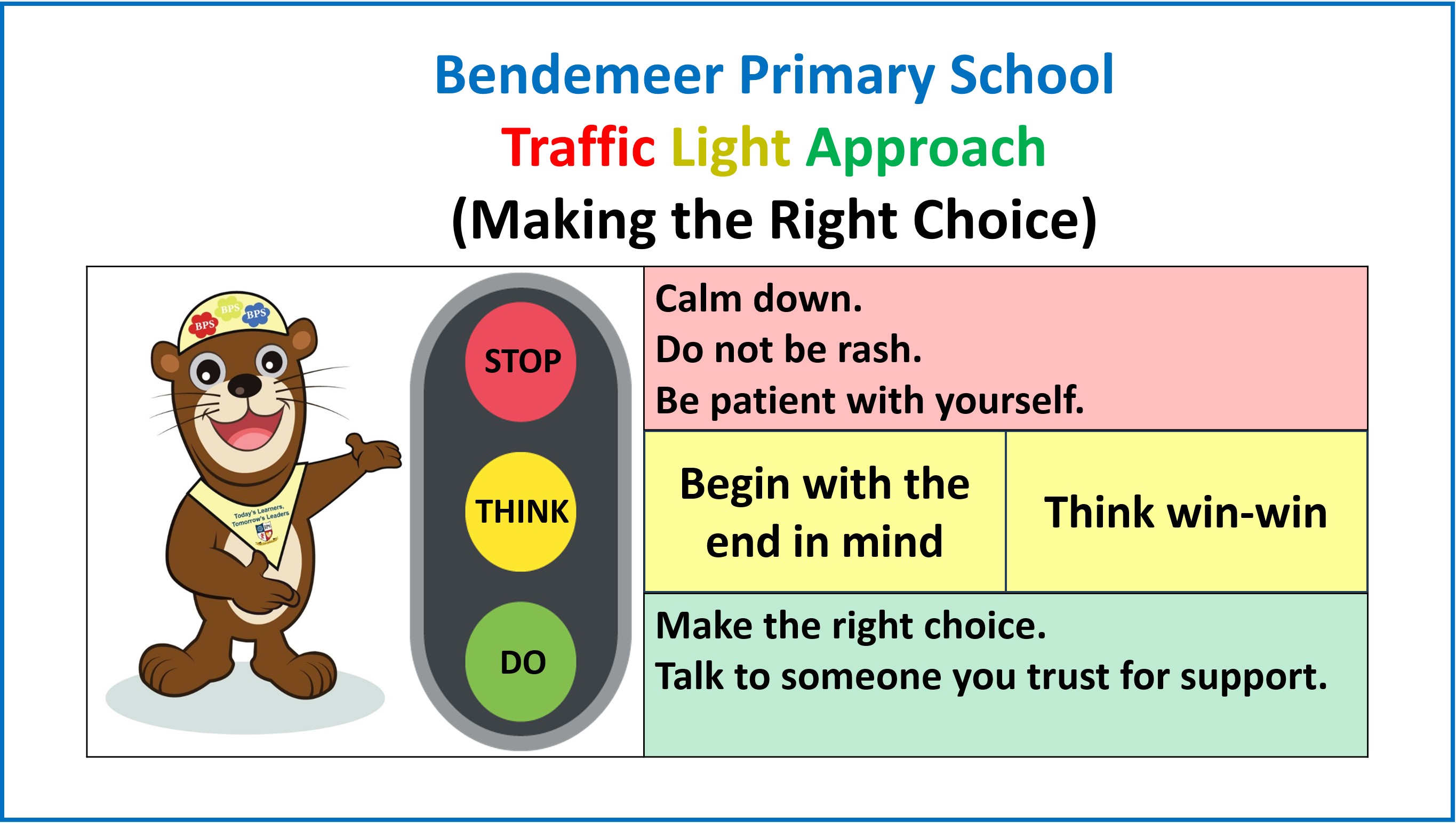
In BPS, we adopt a proactive and restorative approach to behaviour management grounded in positive education principles. The Stop, Think, Do model serves as a key framework to promote positive behaviour among students.
This model emphasises self-regulation, problem-solving and responsible decision-making. By teaching students to pause and reflect before reacting, they learn to manage emotions constructively and respond to challenges appropriately.
Through consistent application of the Stop, Think, Do model, students develop accountability, self-awareness and resilience. The approach supports the development of a growth mindset and strengthens students’ social-emotional competencies, enabling them to make positive choices both in and beyond the classroom.